
Top Web Development Company in Tirur, Kerala
March 10, 2026
How to Choose the Right Software Development Company in Kerala
March 12, 2026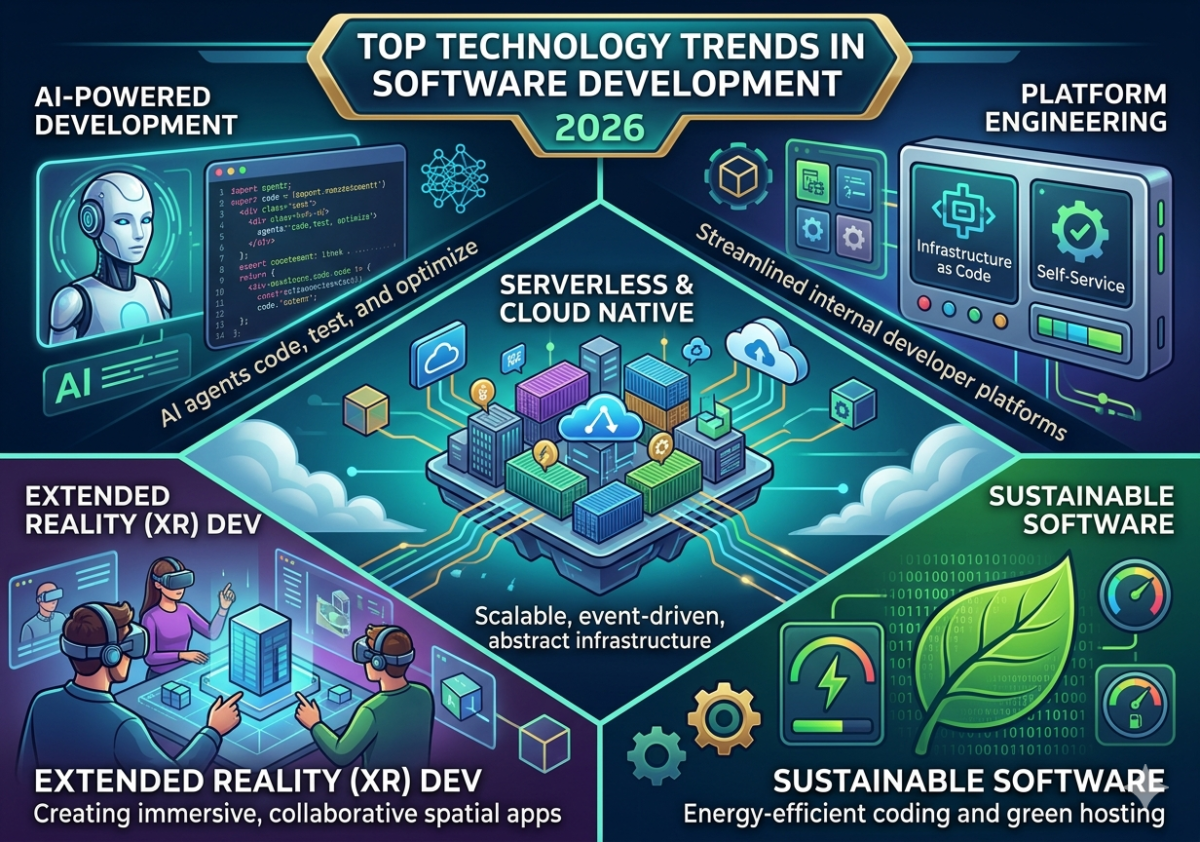
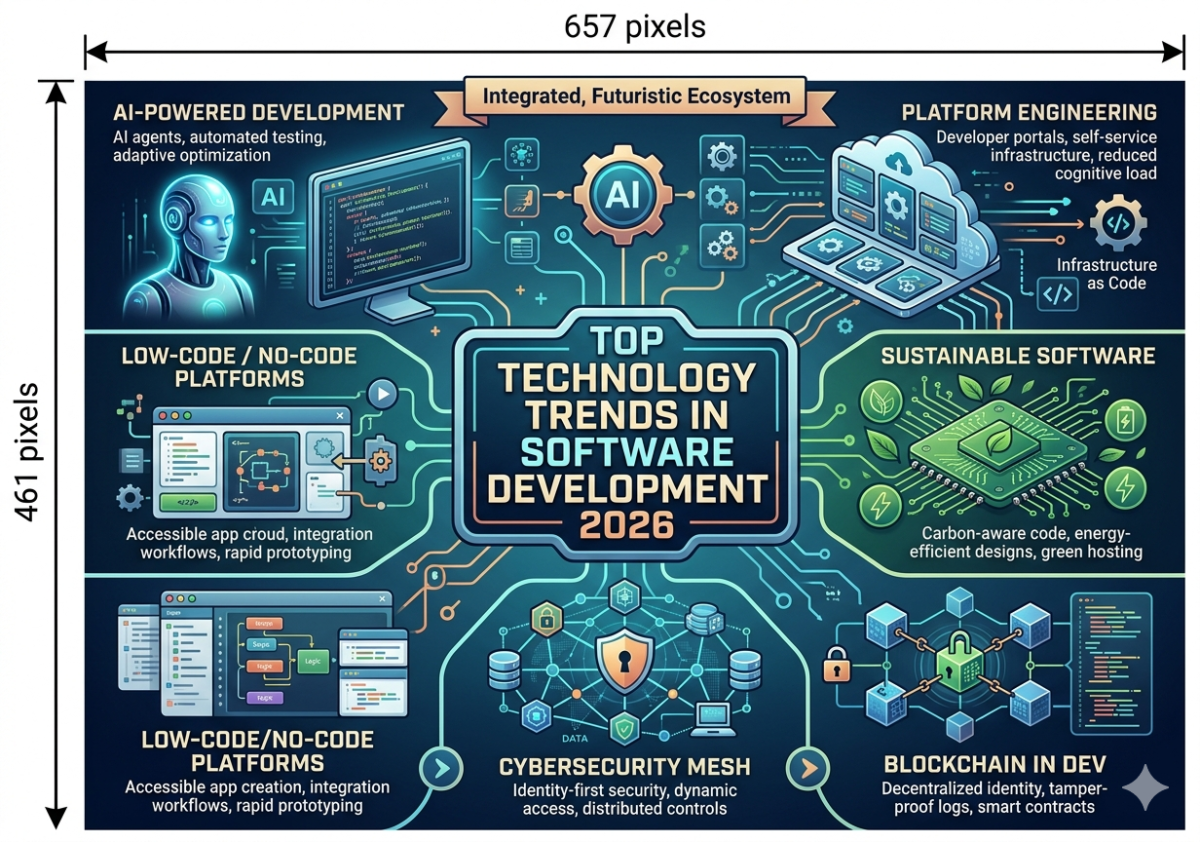
The software development industry continues to evolve rapidly. Businesses across the world are adopting new technologies to improve productivity, security, and customer experience. As we move through 2026, several powerful trends are shaping how developers build modern applications.
From artificial intelligence to cloud-native architectures, these technologies are transforming the digital landscape. Understanding these trends can help businesses stay competitive and developers remain relevant in an ever-changing industry.
Artificial Intelligence and AI-Powered Development
Artificial Intelligence (AI) is becoming a core component of modern software development. AI tools now help developers write code faster, detect bugs, and automate repetitive tasks.
Key AI development trends include:
- AI code assistants and automated coding tools
- AI-powered testing and debugging
- Intelligent chatbots and virtual assistants
- Predictive analytics applications
Companies are integrating AI into business software, e-commerce platforms, healthcare systems, and financial applications.
Low-Code and No-Code Development
Low-code and no-code platforms are making software development accessible to non-technical users.
These platforms allow businesses to build applications using visual interfaces instead of writing large amounts of code.
Benefits include:
- Faster development time
- Reduced development cost
- Rapid prototyping
- Easier automation of business processes
Even experienced developers are using low-code tools to accelerate project delivery.
Cloud-Native Development
Cloud computing continues to dominate the software industry. Cloud-native development focuses on building applications specifically designed for cloud environments.
Popular cloud technologies include:
- Microservices architecture
- Containerization (Docker)
- Kubernetes orchestration
- Serverless computing
Cloud-native applications offer better scalability, flexibility, and performance.
Cybersecurity-Focused Development
With increasing cyber threats, security has become a top priority in software development.
Developers are now implementing DevSecOps, which integrates security practices into every stage of development.
Important security practices include:
- Secure coding standards
- Continuous vulnerability testing
- Identity and access management
- Data encryption and privacy protection
Businesses that invest in secure software development can better protect customer data and maintain trust.
Progressive Web Applications (PWA)
Progressive Web Applications combine the best features of websites and mobile apps.
PWAs are gaining popularity because they offer:
- Fast loading speeds
- Offline functionality
- App-like user experience
- No need for app store installation
Many businesses prefer PWAs because they reduce development and maintenance costs compared to native apps.
Blockchain Integration
Blockchain technology is no longer limited to cryptocurrency. It is being used in various industries for secure and transparent data management.
Use cases include:
- Digital identity verification
- Smart contracts
- Secure payment systems
- Supply chain tracking
Blockchain development is expected to grow significantly in the coming years.
Internet of Things (IoT) Applications
The Internet of Things continues to expand rapidly as more devices become connected to the internet.
IoT software development is widely used in:
- Smart homes
- Industrial automation
- Healthcare monitoring
- Agriculture technology
Developers are building applications that can manage and analyze data from millions of connected devices.
Edge Computing
Edge computing processes data closer to the device instead of sending everything to cloud servers.
This reduces latency and improves performance for real-time applications.
Edge computing is especially important for:
- IoT devices
- Autonomous vehicles
- Smart cities
- Industrial automation
Conclusion
The future of software development is driven by innovation and rapid technological advancement. Trends like AI-powered development, cloud-native architecture, low-code platforms, blockchain, and IoT are transforming how modern applications are built.
Businesses that adopt these technologies early will gain a competitive advantage in the digital marketplace. Developers should continuously upgrade their skills and stay updated with emerging technologies to succeed in this evolving industry.
As we move forward in 2026, embracing these trends will help organizations build scalable, secure, and future-ready software solutions.